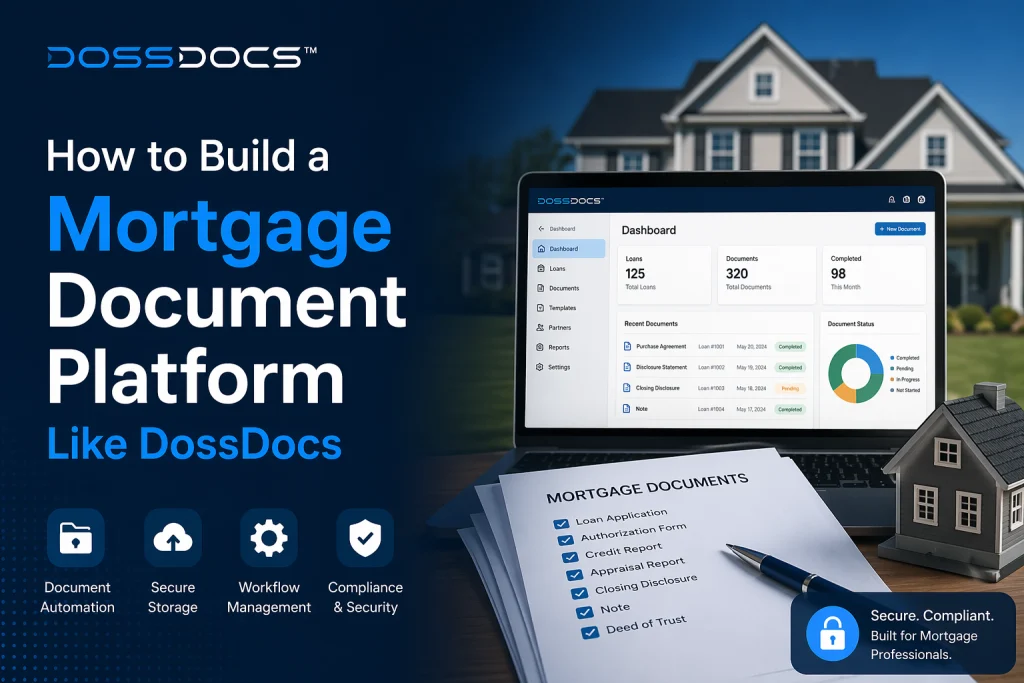
How to Build a Mortgage Document Automation Platform Like DossDocs: The Complete Guide
A mortgage document platform like DossDocs requires complex conditional logic, secure data handling, and precise PDF/DOCX generation for lending paperwork — workflows that Docassemble is well-suited to automate for mortgage and real estate legal tech.
Let me be honest: mortgage documentation is a nightmare. I’ve watched first-time homebuyers stare at 47-page PDFs with a look of pure existential dread. I’ve seen loan officers juggle spreadsheets like they’re playing 4D chess. And I’ve definitely seen compliance teams pull their hair out over audit trails.
But here’s the thing—it doesn’t have to be this way.
If you’re building a mortgage document automation platform, you’re not just solving a tech problem. You’re solving a human one. You’re giving borrowers clarity when they’re stressed. You’re giving lenders speed when they’re drowning in paperwork. You’re giving regulators the confidence that everything is airtight.
This guide covers exactly how to do it—think of it as your blueprint for building a mortgage document automation software that people actually want to use.
1. Why Mortgage Document Automation Actually Matters
Before we dive into the technical weeds, let’s talk about why this industry needs a better approach.
Traditional mortgage processing involves:
- Manual data entry from multiple documents (pay stubs, tax returns, bank statements, employment letters)
- Compliance risks when documents get mixed up or lost
- Delays that stretch a 2-week approval into 45 days
- Stress on borrowers who feel like they’re shouting into the void while waiting for updates
A solid loan document automation platform fixes all of this. But the best ones do something more—they make the entire experience feel less daunting.
When you’re asking someone to put their financial life under a microscope, empathy matters. A lot.
2. Understanding Your Three Core Users (and What They Actually Want)
Before you build anything, understand who’s using your platform.
Borrowers (the folks with the most stress):
- Want transparency without jargon
- Need mobile-friendly access (because 2024 humans don’t sit at desks anymore)
- Crave real-time updates instead of radio silence
- Want to feel like a person, not a loan application number
Lenders (the folks who are drowning in paperwork):
- Need automated document workflows that actually work
- Want mortgage processing automation that cuts their timeline in half
- Crave fraud detection that catches issues before they blow up
- Need audit trails that don’t require a team of forensic accountants to understand
Regulators (the folks in the background checking everyone’s work):
- Require secure storage with military-grade encryption
- Need tamper-proof audit logs for every single action
- Demand compliance with state and federal laws (which vary wildly by jurisdiction)
- Want plain-language documentation of how data is handled
Your platform needs to serve all three. That’s the tricky part—and the rewarding part.
3. Core Features of a Modern Mortgage Document Automation Platform
Let me walk you through the features that actually matter.
Document Automation & Template Management
This is the bread and butter. Your system should auto-generate mortgage forms, promissory notes, disclosure documents, and compliance forms based on loan details.
Think of it like this: instead of a lender manually filling out 15 different templates, they enter borrower info once, and your platform spits out every required document in minutes. Some platforms—like DocAssemble Development—use guided interview workflows to make this process conversational, not robotic.
E-Signature Integration with Legal Weight
Borrowers need to sign documents. Those signatures need to be legally valid. Your digital mortgage documentation solution should integrate with trusted e-signature providers (DocuSign, Adobe Sign) so that signatures are timestamped, auditable, and hold up in court.
Smart Document Upload & AI-Powered Data Extraction
Here’s where OCR and machine learning shine. When a borrower uploads a pay stub or tax return, your system should:
- Recognize what document it is (using OCR)
- Extract key data (income, employment dates, account balances)
- Flag inconsistencies or missing info
- Pre-fill forms automatically
This cuts manual data entry by 70%. Your lenders will weep with joy.
Compliance Engine Built Into Your Architecture
Mortgage regulations are state-specific, lender-specific, and change constantly. Your automated loan origination documents system should have:
- Rules engines that enforce federal regs (Truth in Lending Act, RESPA, TRID)
- State-specific compliance rules
- Real-time updates when regulations change
- Audit trails that show exactly what rules were applied and when
Collaboration Tools That Actually Feel Human
Borrowers, loan officers, underwriters, and appraisers all need to communicate without leaving your platform. Build in:
- In-app messaging (not email, which gets lost)
- Notifications that tell people exactly what they need to do next
- Shared dashboards showing application progress
- Integration with DocAssemble Development’s collaboration features if you’re building on their platform
Transparent Progress Tracking
“You’re 70% done with your mortgage application” hits different than silence. Show borrowers:
- Where they are in the process
- What documents are missing
- What happens next
- How long it typically takes
Stress drops when people know what’s happening.
4. The Technical Foundation: Architecture That Actually Scales
Let’s talk nuts and bolts without getting too deep into the weeds.
Frontend: React or Vue for the web; Flutter or React Native for mobile. Keep it responsive—your borrowers are on iPhones at 11 PM checking on their application status.
Backend: Microservices architecture (Node.js, Python, or Java) so that different systems can talk to each other without one failure taking down the whole platform.
Database: PostgreSQL for structured data (customer info, loan details) and MongoDB for flexible document storage. Always encrypt sensitive data at rest.
AI/ML Layer: Integrate OCR (Tesseract, AWS Textract), NLP for document classification, and machine learning models for fraud detection.
Cloud Infrastructure: AWS, Azure, or GCP—pick one and stick with it. You need auto-scaling because loan applications spike during low-interest-rate windows.
Security: This isn’t optional.
- End-to-end encryption for all data
- Role-based access control (a junior loan officer shouldn’t see another borrower’s application)
- Multi-factor authentication for everyone
- HTTPS everywhere
- Regular penetration testing
5. Compliance: The Unsexy But Critical Part
Here’s what keeps compliance officers awake at night: your platform needs to handle the fact that mortgage rules are different everywhere.
Federal requirements (TRID, Truth in Lending Act, RESPA) apply nationally. But then each state adds its own layer. And individual lenders sometimes have stricter rules than the law requires.
Your system needs:
- A rules engine that can handle complex conditional logic
- Documentation of which rules applied to which loan
- Automated updates when regulations change
- Audit trails that survive legal scrutiny
If you’re building on DocAssemble, you’ve got a head start—the platform handles complex conditional logic and document automation natively.
Don’t cheap out on compliance. A single lawsuit will cost more than you spent building the platform.
6. User Experience: Making Mortgage Documents Feel Less Terrifying
Here’s where the “human touch” becomes real.
Onboarding: Walk borrowers through exactly what they need to do. Don’t dump a form on them and hope for the best. Use progressive disclosure—show one section at a time.
Accessibility: Make sure your platform works for people with screen readers. Support multiple languages (Spanish, Mandarin, etc., depending on your market). Test with real borrowers who have different abilities.
Copywriting: Replace jargon with plain language.
- Instead of: “Provide documentation of liquid assets exceeding 6 months PITI”
- Say: “Upload your bank statements so we can see you have a 6-month emergency fund”
Dashboard Design: Show progress visually. Use a progress bar. Use color. Use language that reassures, not confuses.
Mobile-First: Your borrowers are filling out applications on their phones. Make sure it works flawlessly on mobile.
7. Integration Ecosystem: Play Nice With Others
Your loan document automation platform can’t exist in isolation. You need to connect to:
- Credit bureaus (to pull credit reports automatically)
- Banks (to verify employment and income)
- Payment gateways (for fees, down payment verification)
- CRM systems (for lenders to track borrowers through the funnel)
- Cloud storage (let borrowers upload from Google Drive, OneDrive)
- E-signature platforms (for legally valid signatures)
APIs are your friend here. Well-documented APIs make integrations painless.
8. Launch Strategy: How to Actually Get Users
You’ve built something great. Now what?
Start small: Pilot with 2-3 community banks or fintech lenders. Get feedback. Iterate like crazy.
Focus on speed metrics: If your platform closes mortgages in 50% less time than competitors, lead with that.
Offer training: Loan officers need to learn your system. Invest in training and onboarding.
Tell stories: Share case studies of borrowers who closed mortgages faster. Share stories of lenders who cut processing costs. Make it human.
Market to the pain points: Target lenders who are drowning in paperwork. Target borrowers who want transparency.
9. What’s Next: Features Worth Building Later
Once you’re shipping the core product:
- AI-driven mortgage eligibility scoring (tells borrowers upfront if they qualify)
- Blockchain-based document verification (for tamper-proof records)
- Voice assistants (for borrowers to get updates via Alexa or Google Home)
- Predictive analytics (warning lenders of defaults before they happen)
FAQs
1: What exactly is a mortgage document automation platform?
A mortgage document automation platform is software that automatically generates, manages, and tracks all the documents required for a mortgage loan. Instead of a lender manually filling out 15+ documents by hand, they input borrower info once, and the platform generates everything—promissory notes, disclosure documents, compliance forms—with the right data in the right places. It’s like having an assistant who never sleeps, never makes typos, and always knows the latest compliance rules. Platforms like DocAssemble Development can handle this with guided interviews that feel conversational, not robotic.
2: How does AI and OCR help with mortgage document processing?
When a borrower uploads a pay stub or tax return, AI-powered OCR (optical character recognition) scans the document, figures out what it is, and extracts the key numbers—income, employment dates, dates of service. Instead of a human reading through a PDF and typing numbers into a form (which takes time and introduces errors), the system does it automatically. Machine learning models get smarter over time, catching more nuanced details. We’re talking about 70% reduction in manual data entry. For borrowers, it means faster approvals. For lenders, it means fewer errors and faster processing.
3: How do I ensure my platform stays compliant with changing mortgage regulations?
Build a rules engine into your architecture—think of it as the nervous system of your platform. Instead of hardcoding compliance rules into your source code (which requires a developer update every time something changes), store rules in a database that your system references in real-time. When federal regulators update the Truth in Lending Act or a state changes its disclosure requirements, you update the rules database, not the code. Your platform then applies the updated rules to all new loans automatically. Plus, maintain audit trails that document which rules applied to which loan—regulators will ask, and you’ll have the proof.
4: What’s the difference between a mortgage document automation platform and loan document automation software?
They’re cousins. A mortgage document automation platform specifically handles mortgages—home loans, refinances, HELOCs. A loan document automation software is broader and can handle personal loans, auto loans, business loans, or anything else. Some platforms (like DocAssemble Development) handle both mortgages and other document workflows, giving lenders flexibility if they want to expand beyond mortgages later. If you’re mortgage-specific, you can optimize for mortgage-specific workflows. If you’re building for multi-product lenders, you need more flexibility.
5: How much does it cost to build a mortgage document automation platform?
Real talk: this isn’t a nights-and-weekends project. A basic MVP (minimum viable product) with core automation, e-signature integration, and simple compliance rules might cost $150K-$300K to build, depending on your team’s location and experience. A production-ready platform with advanced fraud detection, multi-state compliance, and integration with credit bureaus? You’re looking at $500K-$2M+. Then there’s ongoing maintenance, compliance updates, and customer support. Some companies start by building on platforms like DocAssemble Development rather than from scratch—it cuts costs and speeds up time to market significantly.
6: How do I convince borrowers to use digital mortgage documentation instead of paper?
Answer:
The honest answer: most borrowers prefer digital once they experience it. Digital means they can upload documents from their phone at 11 PM. They get real-time updates instead of calling the lender every 3 days. They see exactly where they are in the process. They know what’s needed next. It feels transparent. From a lender’s perspective, you can offer incentives—slightly lower fees for digital applications, or faster closings (which borrowers will pay for, literally). Also, after COVID, everyone got used to doing financial stuff digitally. You’re not pushing a revolution; you’re offering the norm.
7: What happens to borrower data security in a mortgage document automation system?
This is non-negotiable. Your system should employ:
- End-to-end encryption for all data, both in transit (HTTPS) and at rest (AES-256)
- Role-based access control so a junior loan officer can’t peek at other borrowers’ financials
- Multi-factor authentication so that even if a password is compromised, attackers can’t get in
- Regular penetration testing (hire external security firms to try to hack you)
- Compliance with GDPR, CCPA, and data privacy laws (which vary by jurisdiction)
- Audit trails that log every access to sensitive data
If you’re handling personal financial information, treat security like your business depends on it—because it does.
8: How long does it typically take to close a mortgage using an automated platform vs. traditional methods?
Traditional mortgage closing typically takes 30-45 days. A well-designed mortgage processing automation platform can cut that to 10-20 days, sometimes faster. The speed boost comes from:
- No manual data entry (OCR pulls info automatically)
- Parallel processing (underwriting, appraisal, title search happen simultaneously instead of sequentially)
- Automated compliance checks (no waiting for a person to verify TRID compliance)
- Faster e-signature turnaround (borrowers can sign from their phone)
The exact timeline depends on your lender’s processes and how much they embrace automation. If they still have legacy manual steps, you’re not getting the full benefit.
9: Can a mortgage document automation platform integrate with existing lender systems like CRMs and loan origination systems?
Yes—and it should. Most modern platforms offer API integrations that connect to:
- CRM systems (Salesforce, HubSpot) so loan officers have complete borrower context
- Legacy loan origination systems (LOS) so data flows seamlessly
- Credit bureaus (Equifax, Experian) for automated credit pulls
- Banking systems for employment and income verification
- Title companies and appraisers for smooth handoffs
If a vendor tells you their platform is “stand-alone” and doesn’t integrate with anything, run. Lenders need ecosystem connectivity. Platforms like DocAssemble Development are built with integrations in mind—you can connect to almost anything via APIs or pre-built connectors.
 English