How US Courts Use Docassemble to Improve Access to Justice
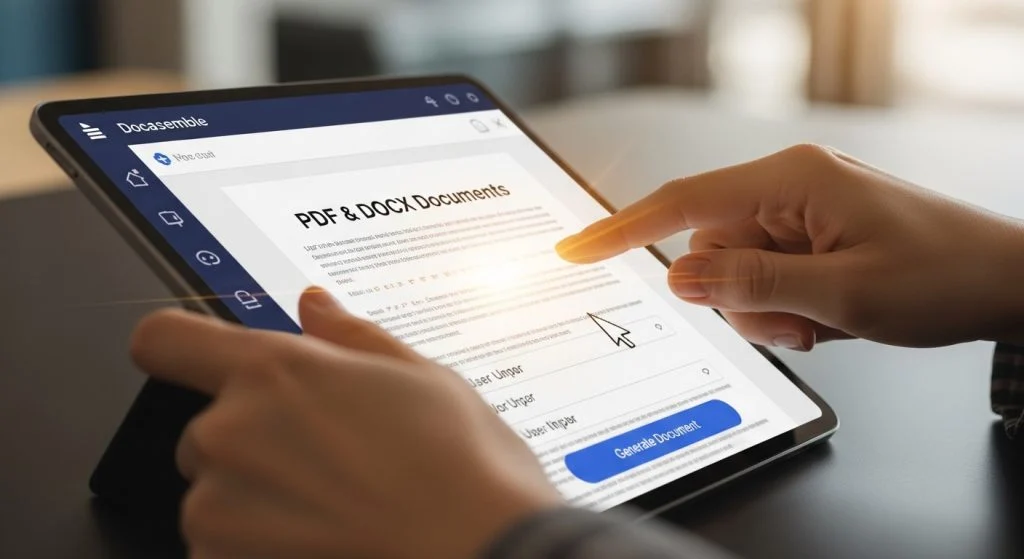
Across the United States, courts are facing a growing challenge: more people need legal help, but fewer can afford lawyers. Today, over 70% of civil litigants in many jurisdictions appear without legal representation. This has placed enormous pressure on court staff, judges, and self-help centers. To address this gap, many courts are turning to Docassemble US courts implementations—using technology not to replace legal judgment, but to simplify access, reduce friction, and empower self-represented litigants. In this article, we explore how US courts are using Docassemble to modernize court services and expand access to justice in practical, measurable ways. The Access to Justice Problem in US Courts Before technology, most court forms were: For self-represented litigants, even simple filings—like name changes, protective orders, or eviction responses—can feel overwhelming. Courts needed a solution that: This is where court document automation software like Docassemble proved to be a turning point. What Makes Docassemble Ideal for US Courts? Docassemble is an open-source legal automation platform designed to guide users through structured interviews that automatically generate legally accurate documents. For courts, this means: Unlike rigid proprietary tools, Docassemble gives courts full control over logic, rules, and content, making it a strong fit for legal document automation for courts. Key Ways US Courts Use Docassemble 1. Online Court Forms for Self-Represented Litigants Many US courts use online court forms automation powered by Docassemble to replace static PDFs. Instead of downloading a blank form, users: This reduces filing errors and improves completion rates significantly. 2. Legal Aid & Self-Help Portals Courts often integrate Docassemble into: These implementations support docassemble legal aid automation, ensuring that litigants who can’t afford attorneys still receive structured legal guidance. 3. Multi-Form Case Packets Many court processes require multiple forms filed together. Docassemble allows courts to: This is especially powerful for family law, housing, and domestic violence cases—where accuracy matters deeply. 4. Language Access & Accessibility Docassemble supports: This directly improves access to justice for non-English speakers and users without legal training. How Docassemble Works Inside a Court System At a technical level, Docassemble combines: Here’s a simplified example of how a court form interview might work: Benefits for Courts and Court Staff Reduced Administrative Burden Faster Case Processing Greater Public Trust These benefits make court document automation software a strategic investment—not just a technical one. Real-World Use Cases in US Courts US courts use Docassemble for: Each use case demonstrates how online court forms automation reduces barriers without lowering legal standards. Why Open-Source Matters for Courts Docassemble’s open-source model is especially important for public institutions. It allows: For courts handling sensitive data, this transparency is a major advantage over closed systems. “Technology doesn’t create access to justice—but it removes unnecessary obstacles that prevent people from reaching it.” Challenges Courts Should Plan For While powerful, Docassemble implementations require: Most courts work with experienced Docassemble teams to ensure long-term success. Final Thoughts Docassemble US courts implementations demonstrate how technology can support—not replace—the justice system. By simplifying legal processes, reducing errors, and empowering self-represented litigants, Docassemble helps courts deliver fairer outcomes at scale. For courts committed to improving access to justice, Docassemble is not just a tool—it’s an enabling platform for modern public service. FAQ 1. What is Docassemble and why are US courts using it? Docassemble is an open-source legal document automation platform that helps people complete court forms through guided, plain-language interviews. US courts use it to make legal processes easier for self-represented litigants, reduce filing errors, and ease the workload on court staff—without changing legal rules or procedures. 2. Does Docassemble replace lawyers or court staff? No. Docassemble does not replace attorneys, judges, or court personnel. It simply helps users understand what information is required and prepares court-ready documents accurately. Courts still review filings, and legal judgment remains fully with judges and legal professionals. 3. How does Docassemble improve access to justice for self-represented litigants? Docassemble removes common barriers like legal jargon, confusing PDFs, and incomplete forms. By asking simple questions and showing only relevant steps, it helps people confidently complete filings they might otherwise abandon—especially in family law, housing, and protective order cases. 4. Is Docassemble secure enough for court systems? Yes. Docassemble is widely used in US courts and legal aid organizations because it allows full control over hosting, security, and data handling. Courts can deploy it in secure environments, apply encryption, audit access, and meet government data protection requirements. 5. What types of court forms can be automated with Docassemble? Courts commonly use Docassemble for name changes, fee waivers, eviction responses, protective orders, family law motions, and other self-help filings. It works especially well for multi-form case packets where accuracy and consistency are critical.
How US Courts Use Docassemble to Improve Access to Justice Read More »