
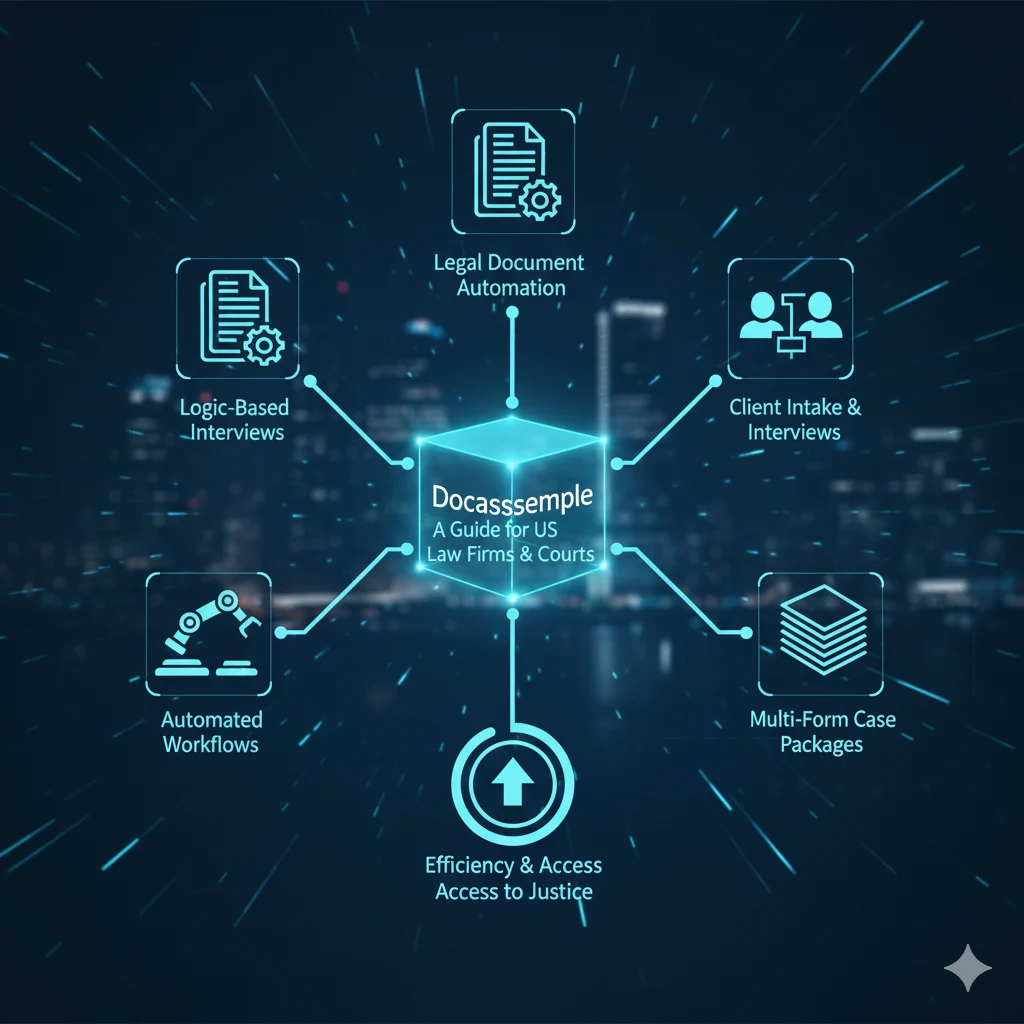
What Is Docassemble? A Guide for US Law Firms & Courts
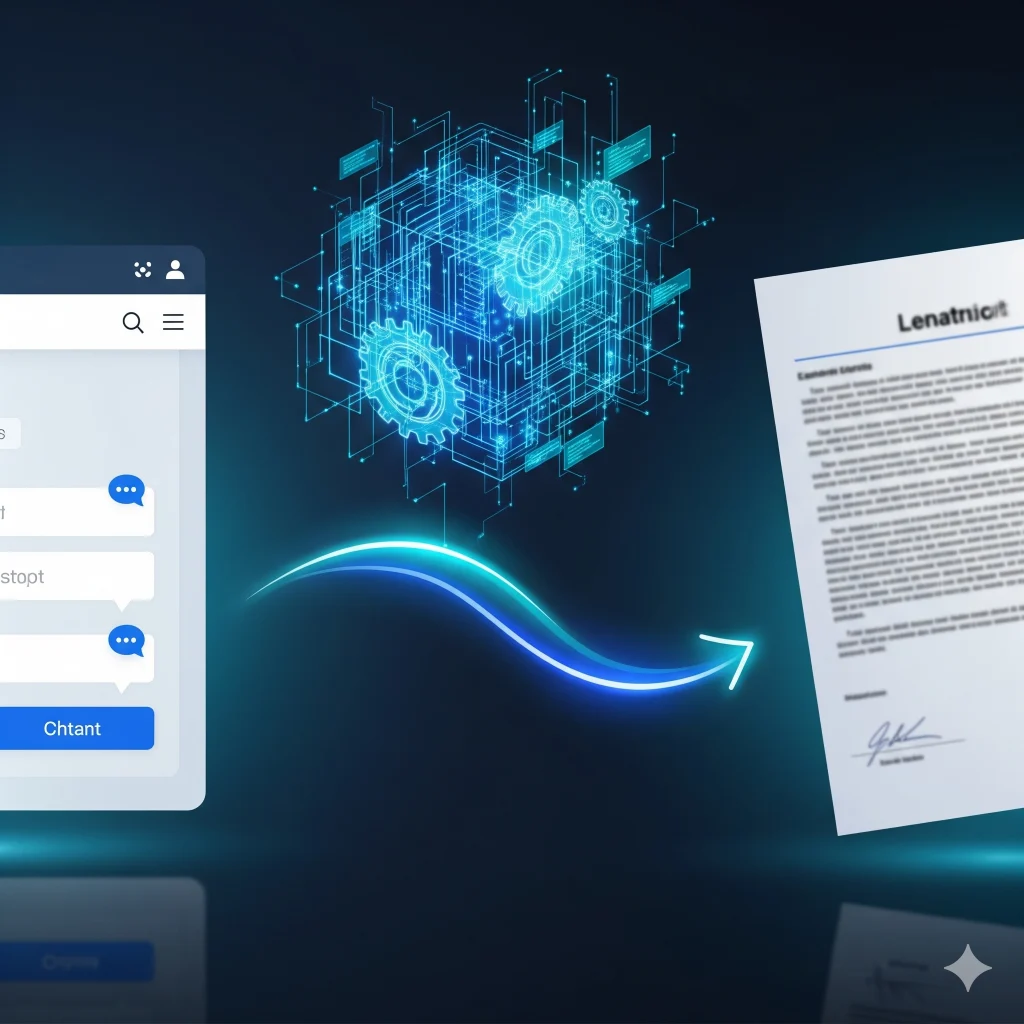
Legal professionals in the United States are under constant pressure to do more with less—serve more clients, reduce turnaround time, maintain compliance, and still deliver accurate, high-quality legal documents. Traditional document drafting methods, spreadsheets, and static templates are no longer enough. This is where Docassemble comes in. In this guide, we’ll explain what Docassemble is, how it works, and why Docassemble for law firms and courts is becoming one of the most trusted approaches to modern legal document automation software in the US. What Is Docassemble? Docassemble is an open-source document automation platform designed to create interactive, logic-driven legal interviews that generate documents automatically in formats such as PDF, DOCX, and RTF. Instead of filling out static forms or manually editing templates, users answer guided questions. Based on those answers, Docassemble applies legal logic and generates court-ready documents instantly. At its core, Docassemble combines: This makes it ideal for document automation for law firms, courts, and legal aid organizations. Why US Law Firms & Courts Use Docassemble 1. Automation Without Losing Legal Control Unlike rigid proprietary tools, Docassemble allows attorneys to encode their own legal logic. You control how interviews flow, how documents are assembled, and how edge cases are handled. This flexibility is why Docassemble for law firms is popular among firms that handle: 2. Built for Complex Legal Workflows US legal processes are rarely simple. Docassemble handles: This makes it a powerful alternative to traditional law firm automation tools that struggle with complexity. 3. Open-Source Transparency Docassemble is fully open source. That means: For courts and government-funded legal organizations, this transparency is critical. How Docassemble Works (In Simple Terms) A Docassemble system typically includes: This workflow replaces hours of manual drafting with minutes of guided automation—unlocking true automated legal document generation. A Simple Technical Example (Docassemble Logic) Here’s a simplified example showing how Docassemble uses logic to control document flow: Key Use Cases for Docassemble in the US Legal System Law Firms Courts Legal Aid Organizations All of these rely on legal document automation software that can scale securely. Security & Compliance Considerations Docassemble deployments can be designed to meet strict US legal requirements, including: When implemented correctly, Docassemble meets or exceeds the security posture of many proprietary law firm automation tools. “Docassemble doesn’t replace lawyers—it removes repetitive work so lawyers can focus on judgment, strategy, and client advocacy.” Common Challenges (and How to Solve Them) Off-the-shelf setups don’t fit your workflow Solution: Custom interview and logic design Teams struggle with YAML/Python Solution: Work with experienced Docassemble developers Integrations feel complex Solution: Design APIs and data flows upfront With the right implementation partner, Docassemble becomes a long-term asset—not a technical burden. Final Thoughts Docassemble for law firms is not just another legal tech tool—it’s a platform for building custom, logic-driven legal systems that scale with your practice. For US law firms and courts seeking transparency, flexibility, and long-term control, Docassemble offers a future-proof foundation for document automation for law firms and automated legal document generation. With the right strategy and implementation, Docassemble can transform how legal services are delivered—efficiently, securely, and at scale. FAQ 1. Is Docassemble suitable for small and mid-sized law firms? Yes. Docassemble works well for small and mid-sized firms because it automates repetitive drafting without forcing you into rigid templates. Firms can start with a few high-impact workflows—like intake or pleadings—and expand over time without expensive licensing fees. 2. Do lawyers need to know how to code to use Docassemble? Not necessarily. End users (lawyers, staff, clients) interact with simple question-and-answer interviews. However, building and maintaining advanced workflows does require technical expertise, which is why many firms work with Docassemble specialists for setup and customization. 3. How is Docassemble different from standard form builders? Unlike basic form builders, Docassemble supports legal logic, conditional flows, multi-document case packets, and jurisdiction-specific rules. This makes it ideal for real-world legal work, not just simple forms or questionnaires. 4. Is Docassemble secure enough for courts and legal aid organizations? Yes, when implemented correctly. Docassemble can be deployed with strong security controls like encryption, role-based access, audit logs, and secure hosting. Many courts and legal aid organizations in the US already rely on Docassemble for sensitive legal workflows. 5. What types of legal documents are best suited for Docassemble? Docassemble is ideal for documents that follow structured logic—such as pleadings, motions, immigration forms, family law packets, estate planning documents, and court self-help forms. Any process that repeats with variation is a strong candidate for automation.
What Is Docassemble? A Guide for US Law Firms & Courts Read More »


 English